
About Geometrical Dash
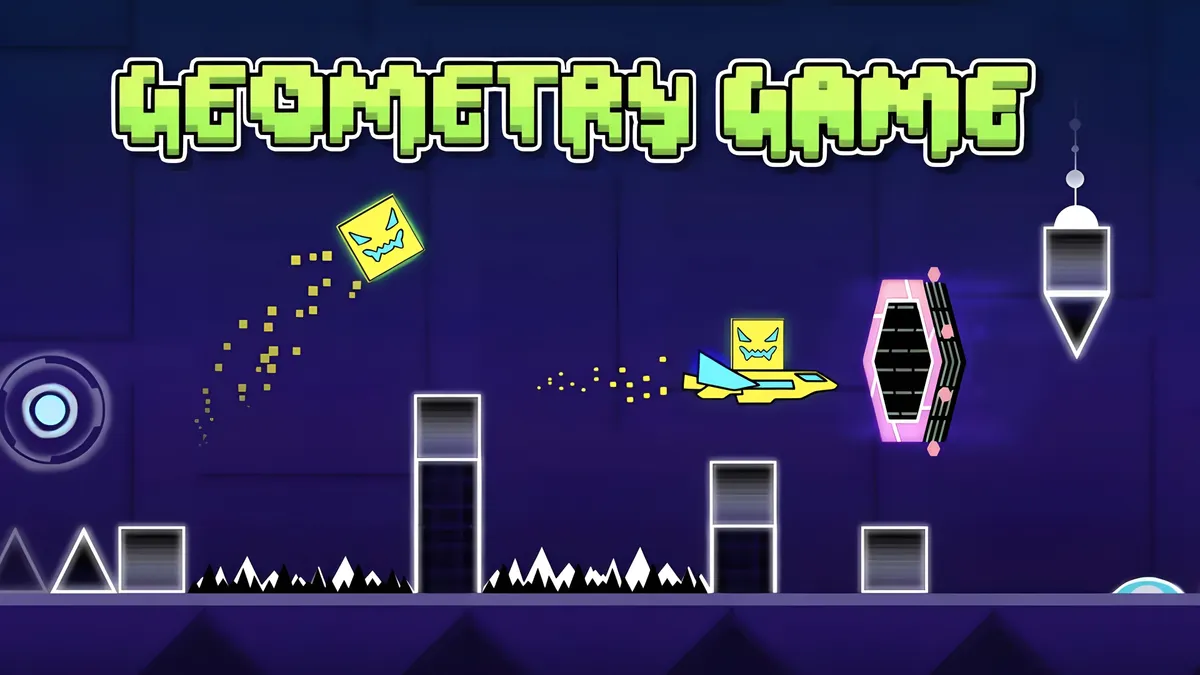
Play Geometrical Dash – Free Rhythm Platformer Online and feel the beat push you forward. This slick rhythm platformer game mixes tight jumps with pulse-perfect timing. You guide a little cube through a spike obstacle course while the EDM game soundtrack cues every leap. It’s a one-button runner at heart, but it rewards finesse. Want quick fun in your browser? This HTML5 arcade game loads fast, runs smooth, and feels amazing.
Geometrical Dash shines because it’s simple to start and deep to master. You’ll recognize the arc: tap to hop, hold to chain, release to reset. Yet the layouts, pads, and portals keep surprising you. The result? A timing-based arcade experience that trains focus and reflexes. It’s a clean, no-download browser platformer you can jump into anytime, anywhere.
Start Here
New to Geometrical Dash? Start with the first level and turn the music up. The beat helps. You’ll learn the language of spikes, pads, and platforms without reading a manual. The goal is simple: reach the end without crashing. The path isn’t. Treat it like fast reflex training wrapped in a catchy rhythm challenge. Keep your taps light, your eyes forward, and your nerves cool.
Game Setup
Getting ready in Geometrical Dash takes seconds. Let the level fully load so every obstacle renders smoothly. Switch on audio; it’s your metronome and guide. If your device stutters, close other tabs to free memory. This free online runner is optimized to run in modern browsers, so you don’t need extra plugins. For comfort, position one hand on the spacebar or mouse. If you prefer quiet, lower music but keep effects on; jump sounds still help with timing.
- Graphics: Keep default to start. Raise only if performance stays steady.
- Audio: Music on for rhythm cues; effects on for tap feedback.
- Controls: Pick one input (space, up, mouse, or tap) and stick with it for consistency.
Basic Rules & Mechanics
In Geometrical Dash, your cube moves forward automatically. Your only job is to jump. Tap to hop over spikes. Hold to sustain longer chains. Release to land clean. Different pads boost you or flip gravity. Portals can warp speed, switch modes, or change your form. Collide with an obstacle and you restart from the beginning or the last practice checkpoint. That’s it. Pure, crisp rules that keep the focus on rhythm and precision.
- Spikes and saws: Avoid by clean, early jumps.
- Jump pads/rings: Activate when touched or tapped to gain height or direction.
- Portals: Watch color and shape to predict effects before you enter.
- Coins/marks: Optional targets that teach clever lines through hazards.
Control Guide
The beauty of Geometrical Dash is the one-button feel. Keyboard, mouse, or touch all do the same thing: jump. Pick a method and practice until it feels automatic. The less you think, the better you flow with the beat. Keep your pointer over the game window, and avoid jitter-clicks. Smooth inputs lead to smooth runs.
- Keyboard: Press space or the up arrow to jump. Hold to chain jumps when safe.
- Mouse/Trackpad: Click and hold when you need extra airtime. Release to land precisely.
- Controller (if supported by your setup): Map a face button to jump for a couch-like feel.
Touchscreen Controls (Mobile)
On phones or tablets, Geometrical Dash is simple. Tap anywhere on the screen to jump. Hold to glide through extended sections. Lift your finger to drop. Keep your device volume on; the soundtrack gives perfect timing cues. Try a few runs with thumbs, then switch to one finger if you need finer control.
Difficulty Options
As you progress in Geometrical Dash, levels escalate from easy to hard and beyond. Early stages teach basics with forgiving gaps. Later routes pack dense hazards and rapid transitions. Don’t rush difficulty. Practice the flow of an easy course until you can clear it twice in a row. Then move up. If a level walls you, switch to practice mode. You’ll lay checkpoints, learn sections, and bring that confidence back to a full run.
- Easy/Normal: Learn timing and pad behavior.
- Hard: Tighter windows, faster chains.
- Insane/Demon-style layouts: Brutal reads and near-perfect execution.
Modes & Variants
You’ll see multiple ways to enjoy Geometrical Dash. Standard mode tracks your clean completion from the start. Practice mode gives you temporary checkpoints so you can master each section. Some versions include community challenges or curated level packs. Prefer quick thrills? Hop into a short course and chase a no-mistake run. Want to grind skills? Replay a favorite layout and focus on one tricky portal chain at a time.
- Standard: One take, no checkpoints, your purest test.
- Practice: Learn sections safely, then stitch them together.
- Challenge packs: Themed routes that sharpen specific skills.
Mastering Geometrical Dash: Timing & Rhythm Tips
Rhythm first, visuals second. In Geometrical Dash, the soundtrack is a guide, not just flair. Count beats on intros. Most jumps sit on downbeats, so tap where the kick lands. In sync sections, treat it like a timing-based arcade metronome. Keep your eyes one tile ahead. Let peripheral vision catch spikes while the music drives your taps. If you drift off-beat, do a quick reset and re-enter on the next musical phrase.
- Tap lighter, not harder. Pressure doesn’t change jumps—timing does.
- Hum or nod to the EDM game soundtrack to stabilize cadence.
- When in doubt, jump a hair earlier. Late kills more runs than early.
Best Starter Strategies for New Players
Start small and stack wins. In Geometrical Dash, choose one easy level and grind it until it feels slow. Limit inputs to one device. Switch only if you truly plateau. Break levels into mental chunks: intro, mid, finale. After each fail, name the mistake—late tap, panic hold, bad portal read—and fix that one thing next run. This is a browser platformer built for repetition, so short sessions work. Two focused minutes can beat ten unfocused ones.
- Warm up on a simple cube jump challenge for three runs.
- Practice exits from jump pads; the landing timing matters.
- End every session on a clean section to lock in confidence.
Advanced Jump Chains and Portal Mechanics
Ready for depth? Geometrical Dash uses pads and portals to remix gravity and speed. Learn how blue orbs extend airtime while yellow rings snap quick hops. Portals may flip gravity or change velocity, so pre-plan holds or releases before entering. Count frames mentally: tap-ride-release on the pad apex. Your goal is smooth arcs that thread hazards without micro-corrections. The moment you force a save, you risk the next spike.
Pair this with steady breathing. In a one-button runner, tension creates jitter. Relax shoulders, soften grip, and let the level flow through you. Precision follows calm.
How to Read Obstacles at High Speed
Your eyes lead your cube. In Geometrical Dash, scan ahead to spot shape patterns—triple spikes, staggered platforms, low ceilings. Train a quick triage: first, identify kill zones; second, locate safe landings; third, plan the jump type. When speed ramps up, anchor to repeating structures. If you see a staircase, expect a rising tap rhythm. If a portal looms, assume a behavior switch immediately after entry. Reading beats reacting.
- Keep gaze 1–2 obstacles ahead.
- Use peripheral vision for hazard edges.
- Sync visual patterns with the musical phrase.
One-Button Control Secrets for Consistency
Consistency is king in Geometrical Dash. Use identical finger placement every run. Tap with the same rhythm even when anxious. Micro-adjust your chair height so your wrist rests comfortably. Build a pre-run ritual: inhale, exhale, tap-test, go. Treat each level like a timing drill inside a polished HTML5 arcade game. When your baseline feels automatic, hard sections stop feeling random and start feeling repeatable.
- Set a “no spam” rule. Every input should have intent.
- If you miss a jump, reset quickly; don’t chase a shaky recovery.
- Keep volume consistent so sound cues stay reliable.
Practice Mode: Build Muscle Memory Faster
Practice mode is where Geometrical Dash progress accelerates. Drop checkpoints at the start of tough clusters. Repeat a segment until your jumps line up with the beat without conscious thought. Then, remove every other checkpoint to stretch your memory. Finally, do a full pass in standard mode while humming the pattern. Muscle memory is the bridge between “I hope” and “I know.”
This mode turns a tough free online runner into a friendly training ground. Respect it, but don’t live in it. Always convert practice wins into clean, full runs.
Level-by-Level Walkthrough for Beginners
The opening stages in Geometrical Dash teach fundamentals calmly. Level 1: Focus on early taps over single spikes and clean landings after pads. Level 2: Expect quick double spikes and a low ceiling—short taps shine. Level 3: First portal appears; prepare for a gravity flip and commit to the new rhythm immediately. Through these, keep the music audible and your eyes ahead. Treat each level as a new accent in the same language.
- Memorize only anchor sections, not every tile.
- Use three-run cycles: learn, confirm, then push for a clear.
- If nerves spike, take a 20-second break, then return.
Beating Hard and Insane Difficulty Stages
When the game says hard, believe it. Geometrical Dash at high difficulty demands sharp reads and perfect taps. Break the level into checkpoints in practice mode, then raise throughput: aim for two sections clean in a row, then three, and so on. Expect denser spike obstacle course patterns and portal switches that test your composure. Your calm breath and steady cadence will carry you more than brute force attempts.
Remember, this timing-based arcade experience rewards patience. You’re building a skill, not rolling dice. Each fail is data. Each clean chain is proof you’re close. Keep it playful, keep it rhythmic, and the clear will land.
With these foundations, Geometrical Dash becomes more than a game. It’s a crisp, musical training ground for your timing, focus, and flow. Ready to tap into the beat and glide past the spikes?
Solo vs. Multiplayer
Geometrical Dash is built for solo mastery, yet the competitive spirit is alive and well. Most browser hubs add leaderboards, friend scoreboards, and timed challenge rotations so you can compare clear times and progress without needing a direct lobby. It feels like asynchronous multiplayer: you chase a rival's ghost time, they chase yours later.
If you crave social play, organize weekly seeds with friends and share your best runs. Swap replays when supported, or post short clips. The rhythm action stays solo, but the race for consistency, badge achievements, and cleaner routes turns Geometrical Dash into a community sport.
Key Features
What makes Geometrical Dash so sticky? A tight loop of rhythm, precision, and clarity. You know why you failed. You know how to fix it. That loop keeps you pressing restart.
- Signature neon geometry style for crisp readability at speed.
- Beat-matched level design that rewards steady reaction time skills.
- One-click retries and instant checkpoints in supported practice modes.
- Cosmetic unlocks for long-term goals and expressive flair.
- Lightweight performance so it runs smoothly in fullscreen browser mode.
- Optional practice mode guide cues to help route tricky sections.
- Replayable stages that invite speedrun experimentation and level walkthrough study.
Heroes & Skills
Your “hero” is a customizable icon that shifts forms mid-level: a grounded jumper, a flying craft, a gravity-swapping avatar, and more. Each form follows simple rules, but in sequence they demand poise. Geometrical Dash rewards three core skills: consistent timing, safe spacing, and quick adaptation when a portal flips the rules.
Build reaction time skills by focusing your eyes slightly ahead of the icon, not on it. Glance at upcoming spikes and pads, then commit. In tougher sections of Geometrical Dash, micro-taps or micro-holds define success, so practice feather-light inputs and keep a steady rhythm.
Items & Boosts
Expect jump pads, jump rings, gravity portals, speed changers, and launchers. They aren’t “powerups” in the classic sense. Instead, they’re rails that reshape your path. Tap on a ring to redirect, glide through a portal to invert gravity, or ride a speed gate to ramp up the pace. Geometrical Dash uses these cues to teach you routes without walls of text.
Cosmetics and unlocks feel like boosts to morale. Clear milestones to open more icon shapes and color palettes. It’s progress you can wear, and it pushes you to refine the craft inside Geometrical Dash without breaking the game’s balance.
Levels & Progression
The difficulty curve starts approachable and climbs. Early stages emphasize clean fundamentals. Later sets demand tight windows and layered inputs. Treat each level of Geometrical Dash like a song: learn the verse, nail the chorus, then loop it until muscle memory takes hold.
Here’s a simple approach: first run blind and just feel the beat. Then switch to checkpoints if the build supports it, using a focused practice mode guide. Finally, do a clean attempt and study your mistakes. A short level walkthrough—for yourself or from a trusted creator—can highlight safer lines you missed. This method keeps frustration low and momentum high in Geometrical Dash.
Achievements & Badges
Badge achievements mark more than bragging rights. They’re mini-goals that nudge you to try new difficulties, clean up deaths in specific sections, or replay a stage for consistency. Pick a small set of badges to target each week. The steady drip of wins keeps Geometrical Dash fresh and turns casual sessions into visible progression.
Graphics & Display Settings
Visual clarity is king. If your version exposes toggles, start with reduced post-processing and bold, high-contrast colors. The iconic neon geometry style pops best against darker backgrounds. Cap your framerate at a stable value rather than chasing a number that your device can’t hold. A stable 60 is far better than a choppy 120 in Geometrical Dash.
Geometrical Dash Fullscreen Mode
(press Fullscreen button under the game window)
Switching to fullscreen browser mode cuts distractions and input errors. It also reduces accidental clicks outside the canvas. If your browser prompts for permission, allow it. To exit, tap the on-screen control or press Esc. Fullscreen makes timing tells easier to see in Geometrical Dash, especially during fast color-shift sections.
Speedrun Routes: Cut Seconds Off Your Runs
Speed is precision plus intent. Start by mapping “anchor” moments—safe jumps you can always hit. From there, trim airtime. Shorter arcs mean earlier landings, which unlock earlier next jumps. In Geometrical Dash, milliseconds hide in how long you hold. Make holds as short as the obstacle allows.
- Study replays or a compact level walkthrough to spot faster lines.
- Prefer flat landings over floaty ones; you regain control sooner.
- Learn buffer taps: press slightly before landing so the game registers instantly.
- Route for consistency first. A slightly slower, death-proof line wins in Geometrical Dash marathons.
When you’ve got a route, lock a metronome in your head. Speedruns hinge on rhythm memory under pressure. The more you automate, the faster Geometrical Dash feels.
Icon Skins, Colors, and Personalization
Cosmetics are more than style—they’re visibility. High-contrast icon skins make hazards easier to parse at a glance. Pick a bold primary and a distinct secondary for clarity in Geometrical Dash. Swap palettes depending on the stage’s background brightness. And yes, flex your wins: showcasing a rare colorway pairs nicely with hard-earned badge achievements.
Soundtrack Sync: Play to the Beat
Rhythm is the secret coach. Many jump chains line up with snare hits or bass drops. Hum along if it helps. Your reaction time skills improve when you anchor taps to the song instead of only the screen. In Geometrical Dash, when visuals get noisy, the beat still tells the truth.
- Count patterns: “1-2, 1-2-3” can anchor tricky clusters.
- Lower music volume slightly if it overwhelms SFX cues.
- If audio latency is high, re-sync in settings or change output devices for Geometrical Dash.
Mobile vs. Desktop: Which Plays Better?
On phones, mobile tap controls are delightfully direct. Less desk clutter, more flow. But thumbs can obscure obstacles, and some devices add input latency. On computers, desktop keyboard controls keep the screen clear and can feel snappier. Spacebar or mouse clicks? Try both. Your best platform for Geometrical Dash is the one where you make fewer micro-mistakes over time.
Travel a lot? Mobile is unbeatable for practice bursts. Chasing records? A tuned desktop can deliver steadier timing windows in Geometrical Dash.
Unblocked Access at School or Work: Safe Options
Some networks filter games, even harmless ones. Look for a reputable portal that clearly lists permissions, uses HTTPS, and keeps ads family-friendly. A well-known site presenting the title as an unblocked rhythm game is ideal. If your environment has strict policies, ask your admin which sites are approved before you play Geometrical Dash. That way you stay compliant and still get your rhythm fix.
Fullscreen Setup for Distraction-Free Play
Want a calmer play space? Use fullscreen browser mode:
- Launch the game page and wait for assets to load.
- Click the on-page Fullscreen control.
- Accept your browser’s permission prompt if shown.
- Hide other tabs or set Do Not Disturb for true focus in Geometrical Dash.
Bonus tip: dim room lights and nudge brightness up a touch. The contrast boost helps with quick reads in Geometrical Dash.
Lag Fixes and Smooth 60 FPS Settings
Stutters steal runs. Tidy your setup and follow these lag reduction tips:
- Close heavy tabs and background apps before loading Geometrical Dash.
- Disable aggressive extensions on the game page (ad-heavy blockers can conflict with canvases).
- Enable hardware acceleration in your browser settings.
- Use a wired keyboard/mouse if possible for tighter input in Geometrical Dash.
- Pick a stable refresh target; a locked 60 beats an unstable 90.
- Update graphics drivers and switch laptops to High-Performance mode.
If you still see desync, toggle VSync or frame caps. Smooth frames make rhythm sections much easier to route in Geometrical Dash.
Common Mistakes and How to Avoid Them
- Overholding jumps: it feels safe, but it bloats airtime. Train short taps in Geometrical Dash and watch sections shrink.
- Staring at the icon: look ahead by one obstacle. Your hands will follow.
- Skipping practice: use a focused practice mode guide session to isolate a choke and solve it once.
- Ignoring sound: the soundtrack is a built-in metronome for Geometrical Dash.
- Changing settings mid-grind: lock a configuration and build muscle memory first.
Treat each fail as data. Note the cause, adjust the input, and try again. With that mindset, Geometrical Dash stops feeling random and starts feeling fair.
Common Issues & Fixes
If Geometrical Dash hiccups, freezes, or feels off-beat, take a breath and try a few quick checks before restarting your device.
- Game not loading: Clear the browser cache and cookies, then reload Geometrical Dash in a fresh tab. Update Chrome, Edge, Firefox, or Safari to the latest version for the best HTML5 arcade game support.
- Choppy performance: Close unused tabs and background apps, then enable hardware acceleration in your browser settings. For extra smoothness in Geometrical Dash, switch to fullscreen browser mode to reduce desktop clutter and background compositing.
- Input delay: On laptops and desktops, prefer wired desktop keyboard controls over Bluetooth to cut latency. On phones, tap with a single finger and avoid edge swipes so Geometrical Dash doesn’t collide with system gestures.
- Audio out of sync: If the EDM game soundtrack drifts from the visuals, toggle mute on and off, or switch to a different browser. Geometrical Dash relies on precise timing, so consistent audio output matters.
- Lag reduction tips: Lower your screen resolution, turn off other streams, and use a stable 5 GHz Wi‑Fi band. Geometrical Dash shines when network and CPU spikes are under control.
- Fullscreen issues: If the in-page toggle fails, press your browser’s fullscreen key (F11 on many keyboards) and then refocus the game canvas. This often fixes Geometrical Dash focus glitches that block inputs.
- Save progress not sticking: Ensure cookies and local storage aren’t blocked, and keep playing Geometrical Dash on the same device and browser. Private mode can wipe your runs the moment you close the tab.
- Mobile tap controls misfires: Turn off triple-tap zoom and system gesture edges in your OS settings. A clean screen also helps Geometrical Dash read your taps consistently.
- Keyboard conflicts: Some extensions remap keys. Disable them or remap in-game if available so Geometrical Dash receives clean input from space, up, or click.
- School or work network blocks: Use a reputable site served over HTTPS and avoid shady proxies. If Geometrical Dash is educationally permitted, request your admin to whitelist the unblocked rhythm game category.
Where to Play Geometrical Dash Unblocked
Want a quick session between classes or on a shared device? Look for a trusted portal that serves Geometrical Dash via HTTPS and uses standard web tech with no extra installs. This keeps the browser platformer accessible on managed networks that allow learning-friendly games.
Search for curated hubs that host a free online runner with content rated for all ages. When Geometrical Dash is hosted as a tidy, ad-light embed, it’s more likely to pass filters and run smoothly on older school laptops.
If your network still blocks the page, check if your region filter is the cause and try another compliant mirror. You can also ask admins to review Geometrical Dash under the timing-based arcade or skill-building category, since the game trains focus and rhythm without chat or user-generated content.
Play on Phones & Tablets
On iOS Safari or Android Chrome, Geometrical Dash loads fast and respects simple mobile tap controls. Keep auto-rotate locked to prevent accidental flips mid jump, and disable battery saver if frames drop during busy patterns.
For extra clarity, raise brightness slightly and enable reduced motion if your OS offers it. A steady frame pace helps Geometrical Dash land jumps precisely, especially during rapid sequences that test reaction time skills.
Can I Play Geometrical Dash Offline?
By default, Geometrical Dash runs in the browser and needs a fresh load to fetch assets. Some sites ship a service worker so the HTML5 arcade game can cache levels and music, letting you replay when the connection blips. Results vary by host, so test offline before a long trip.
If your portal supports cached assets, you can open practice and replay routes without data. That’s handy for a personal practice mode guide, letting you rehearse tricky patterns and keep Geometrical Dash up to tempo even when signal bars are low.
Safety & Content for Geometrical Dash
Parents and teachers often ask about age-appropriateness. Geometrical Dash features abstract shapes, a neon geometry style, and jump-based challenges. There’s no violence, chat, or user-uploaded content. It’s a rhythm platformer game that favors timing, focus, and positive persistence.
Sensitivity notes: the background flashes, quick camera shifts, and pulsing beats might bother sensitive players. Use built-in comfort options when available, lower brightness, and consider shorter sessions. With mindful settings and supervised play, Geometrical Dash encourages fast reflex training in a safe, upbeat space.
Games Similar to Geometrical Dash
If you love the snap-to-the-beat feel, you’ll find plenty of neighbors in the timing-based arcade lane. These suggestions mirror the one-button runner style, focus on clean inputs, and emphasize flow states rather than complex combos—great companions to Geometrical Dash on any day.
- Pulse Jump: A tight browser platformer with pulsing hazards and snappy jumps that reward perfect timing.
- Beat Glide: Dodge-and-dash with music-reactive obstacles, designed for improving reaction time skills fast.
- Neon Runner X: Minimalist lanes, precise taps, and a forgiving learning curve before expert chaos.
- Vector Vault: Jump-cube parkour with stark contrasts, tapping into the same geometric vibe as Geometrical Dash.
- Rhythm Rift: A free online runner where every barrier snaps to the track, ideal for practicing consistent cadence.
- Mono Leap: Pure one-button runner design with short levels, tailored for micro-sessions and mastery.
Achievements Checklist and Badge Hunting
Chasing milestones gives every session purpose. Build a personalized checklist and knock out badge achievements one by one. Start with survival targets, then pursue style milestones like no-death clears and coin-perfect routes in Geometrical Dash.
- First 30 Seconds: Survive the opening rush without a miss, cementing your cadence in Geometrical Dash.
- Cube Jump Challenge: Clear a set number of consecutive hops with perfect spacing to sharpen consistency.
- Spike Obstacle Course: Pass a dense spike wall without grazing, then replicate it three times in a row.
- No-Pause Sprint: Finish a full stage in one breath, reinforcing discipline and reaction time skills.
- Practice Master: Use checkpoints to map a section, then re-run it clean without guides in Geometrical Dash.
Stuck on a badge? Watch a concise level walkthrough for lining up cues, then return to practice mode for muscle-memory reps. Three short sessions often beat one marathon grind, especially when your focus is fading in Geometrical Dash.
Accessibility Settings for All Players
Small tweaks can transform comfort and clarity. Toggle reduced motion if flashing throws you off, and bump contrast to make hazards pop. Remap inputs so desktop keyboard controls feel natural, mute or soften the EDM game soundtrack if you track visuals better, and use larger UI scaling when available. With these tweaks, Geometrical Dash welcomes every play style and preference.
Offline Play: What Works Without Internet
When cached by the host, essentials like sprites, fonts, and some tracks can run offline. That means you can rehearse a section or two and keep Geometrical Dash flowing on the go. What usually won’t work: cloud saves, fresh ads, and newly added levels. If your connection drops mid-session, just avoid refreshing the page until you finish your run.
Games Like This Rhythm Platformer
Prefer the same crisp, music-led flow? Seek titles with clean silhouettes, instant restarts, and a forgiving first level. The best companions to Geometrical Dash lean into readable lanes, short attempts, and a learning curve that respects your time—perfect for daily tune-ups.
Conclusion
Whether you’re fine-tuning inputs, exploring an unblocked mirror, or dialing in comfort options, the fun starts when everything feels responsive and fair. Use practice, short checklists, and steady cadence to cut through walls and keep Geometrical Dash in rhythm. It’s a compact lesson in focus, timing, and poise—one jump at a time.
Gameplay Video
Frequently Asked Questions
What kind of game is Geometrical Dash?
It's a rhythm platformer game and timing-based arcade one-button runner. Guide a cube through a spike obstacle course in neon geometry style to an EDM game soundtrack.
How do I play on phone, tablet, or computer?
Use mobile tap controls on phones and tablets. On PC, desktop keyboard controls like Space or mouse click make the cube jump.
Is Geometrical Dash free and unblocked to play at school?
Yes. It's a free online runner in your browser platformer. Many sites offer an HTML5 arcade game and an unblocked rhythm game version, depending on your network.
How can I improve performance and my skills?
Turn on fullscreen browser mode, close extra tabs, and follow lag reduction tips. Practice for fast reflex training and sharper reaction time skills.
Are there modes, guides, and rewards to unlock?
Try practice mode guide and level walkthroughs to learn patterns. Earn badge achievements while you beat the cube jump challenge.